Night Vision Goggles, Explained
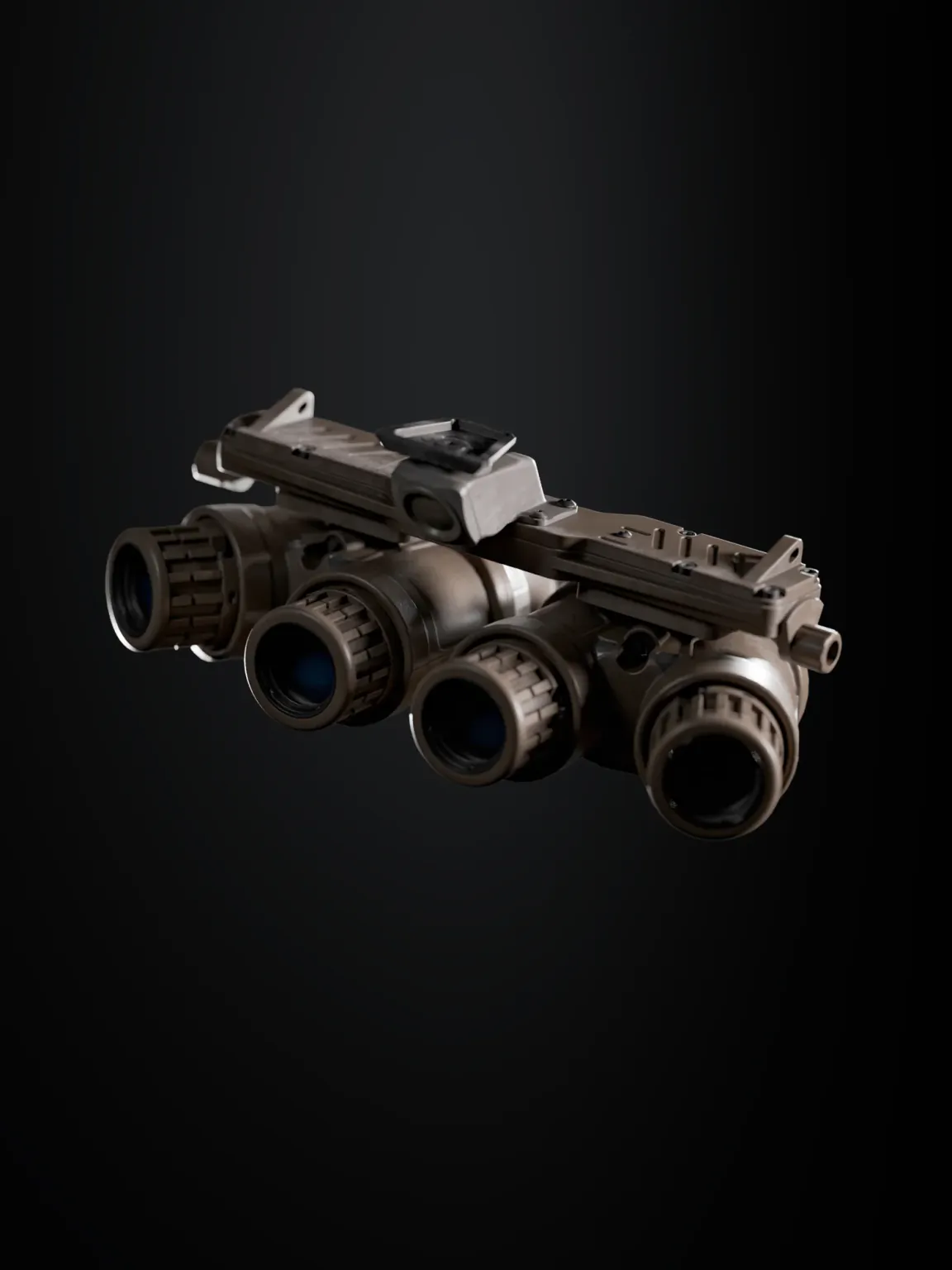
Night vision
Night vision goggles, explained
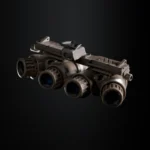
A night vision goggle takes the little light that is left after dark, from the moon or the glow of a town on the horizon, and makes it bright enough to move by. We sell two of them, the Argus BNVD-1431 MK2 with two tubes and the Argus APNVG with four, and most of what separates them comes down to how much of the night you see at once.
Binocular from €6.620 · Panoramic from €16.450 · Price includes VAT, free shipping worldwide
The basics
What is night vision?
Night vision is a device with image intensifier tubes that take the light that is left at night and turn it into a picture bright enough to see by. The tube is the heart of it, because the better the tube, the less light it needs: the 1600+ tubes in both our devices stay clean as long as there is some moon or city glow.
Both devices we sell are made by Argus, both use white phosphor tubes and both fit any Wilcox-compatible helmet mount, so the real difference between them is the number of tubes and what that does to your view.
I was eighteen and had only just joined my unit in the Air Mobile Brigade when a night vision device was pressed into my hands, with the words: don’t lose this, or you will be paying for it. It was green phosphor and the quality was low, but seeing the night like that for the first time was still something else, and so was all the kit that came with it.
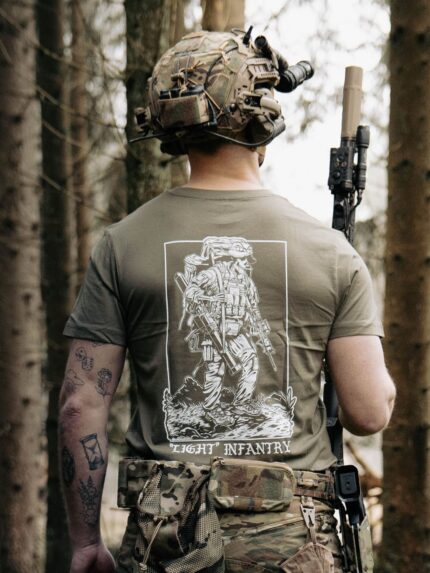
We walked with monoculars, and not long after that we were issued Theons, but most of the time we still had a single tube in front of our eyes. With one tube you lose your sense of depth, so you catch your gear on things or walk your head into something that was just a little closer than it looked. Wear it on your helmet with a counterweight on the back for a long night and you feel it in your neck, and the chin strap you pulled tight sits in your jaw, especially with the old helmets we still had back then.
We sell night vision now because it has become a bit of a must-have, and because we think it is seriously cool. I would love to help as many people as possible get their hands on one.
Two devices
What is the difference between the BNVD-1431 MK2 and the APNVG?
The BNVD-1431 MK2 has two tubes and a view of about 40 degrees, the APNVG has four tubes and a view of about 100 degrees, and most of the other differences follow from that.
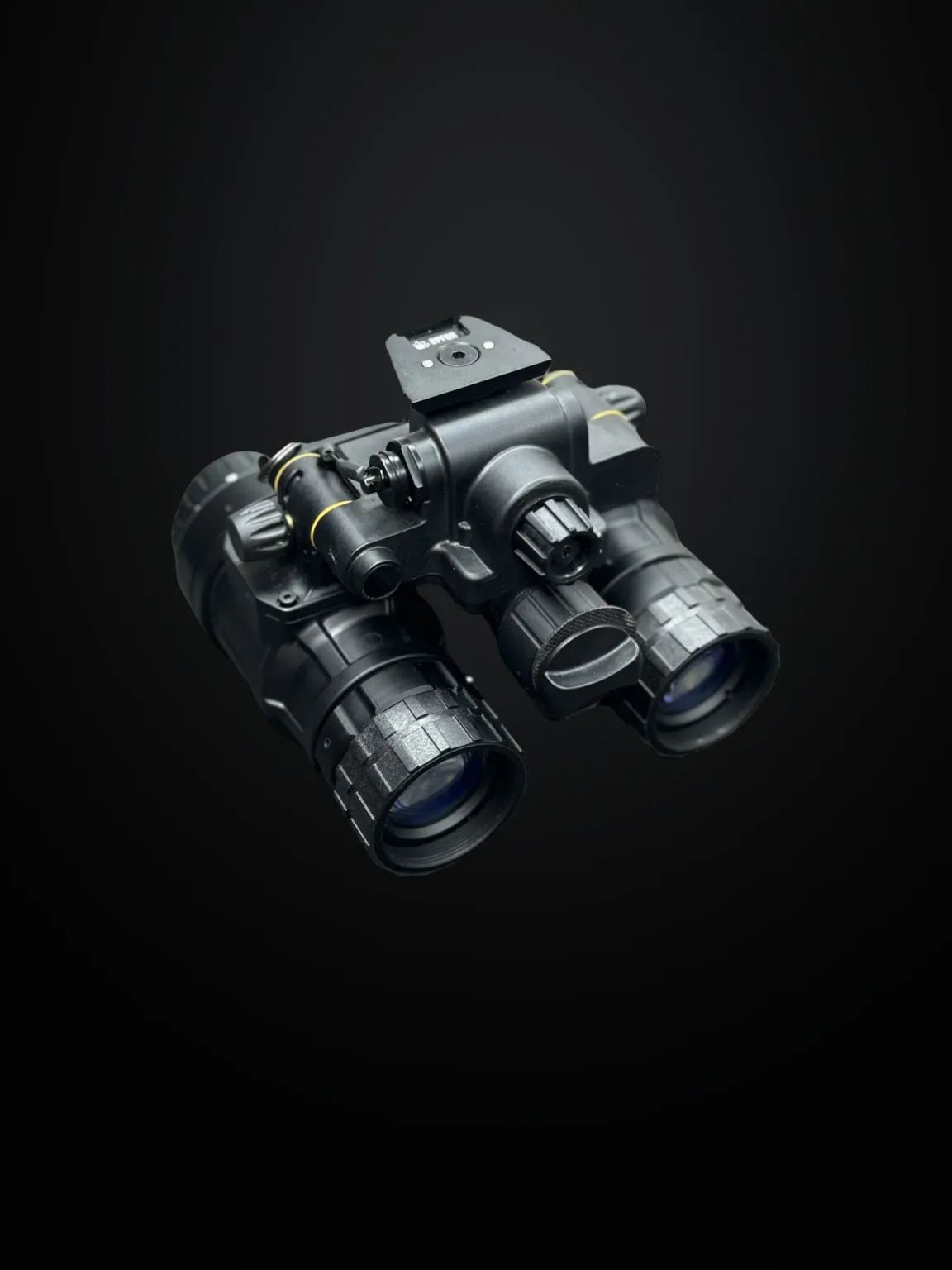
Binocular, 2 tubes
Argus BNVD-1431 MK2
Two white phosphor tubes, one in front of each eye, so you can still judge distance after dark.
From €6.620
View product
Panoramic, 4 tubes
Argus APNVG (PNVG18)
Four tubes and a view of roughly 100 degrees, where a regular binocular stops at 40.
From €16.450
View product
| BNVD-1431 MK2 | APNVG (PNVG18) | |
|---|---|---|
| Image intensifier tubes | 2, white phosphor | 4, white phosphor |
| Field of view | about 40° | about 100° |
| Figure of merit | 1600+ | 1600+ |
| Tube series | NNVT5 | NNVT5 |
| Autogate | yes | yes |
| Manual gain | yes | yes |
| Power | 1 x AA | 4 x AA in a battery pack |
| Battery life | more than 15 hours on one AA, more than 50 with a battery pack | about 100 hours |
| Waterproof | IP68 | 2 m for 30 minutes |
| Weight | 500 to 580 g | about 1100 g with battery pack |
| Mount | Wilcox-style dovetail | Wilcox-style dovetail, helmet mount included |
| Price, VAT included | from €6.620 | from €16.450 |
The binocular is the one you can split, because each pod folds away by 140 degrees and comes off completely, so you can run it with both eyes or flip one side up and keep the other eye on the world around you. It runs for more than 15 hours on a single AA battery, it is sealed to IP68 and it uses the PVS-14 lens system.
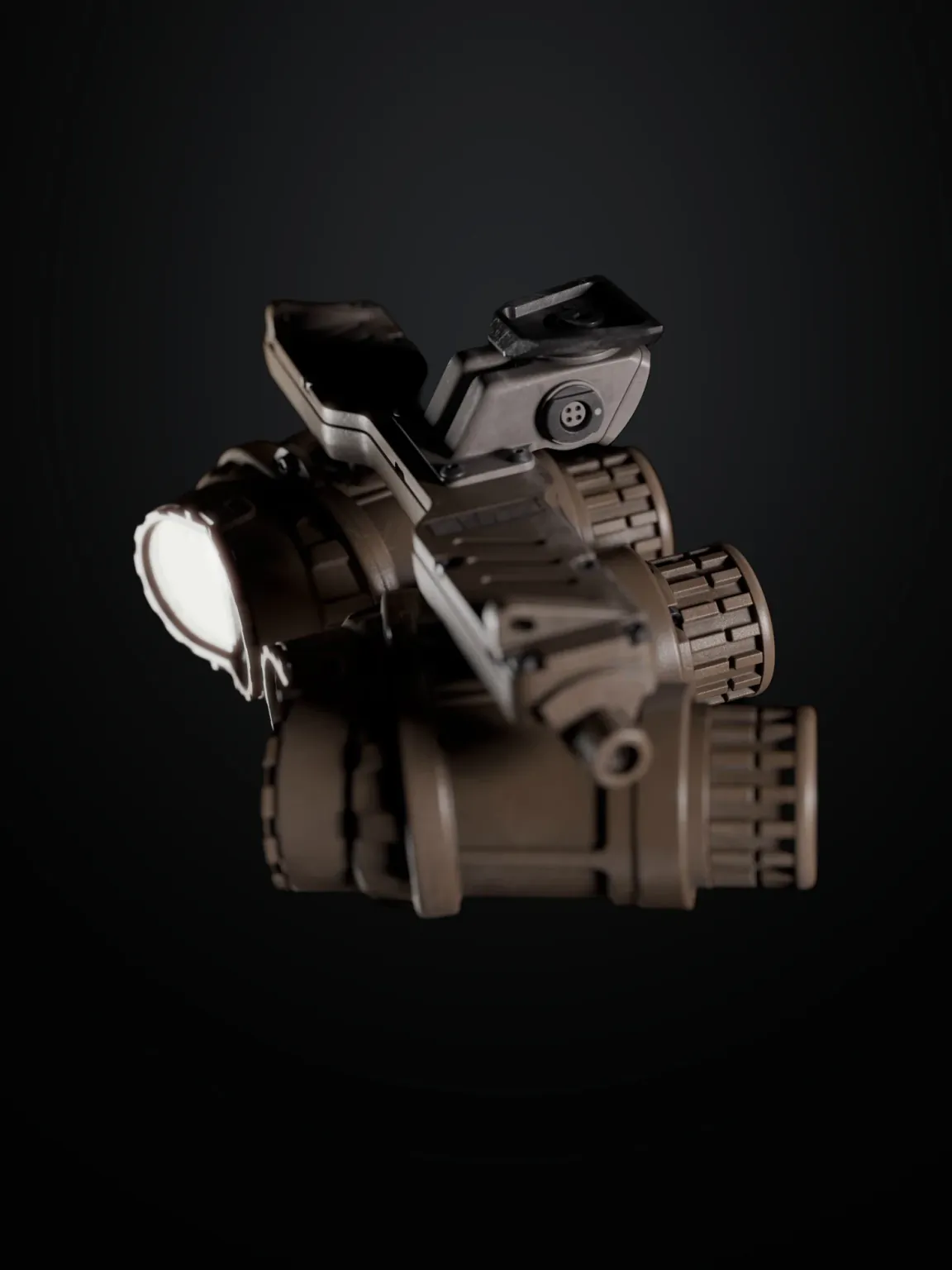
The APNVG is the one for when you want the whole treeline in view, and it comes ready to mount, with a helmet mount in coyote tan, a battery pack that runs on four AA batteries for about 100 hours, four day filter caps and a black hard case in the box.
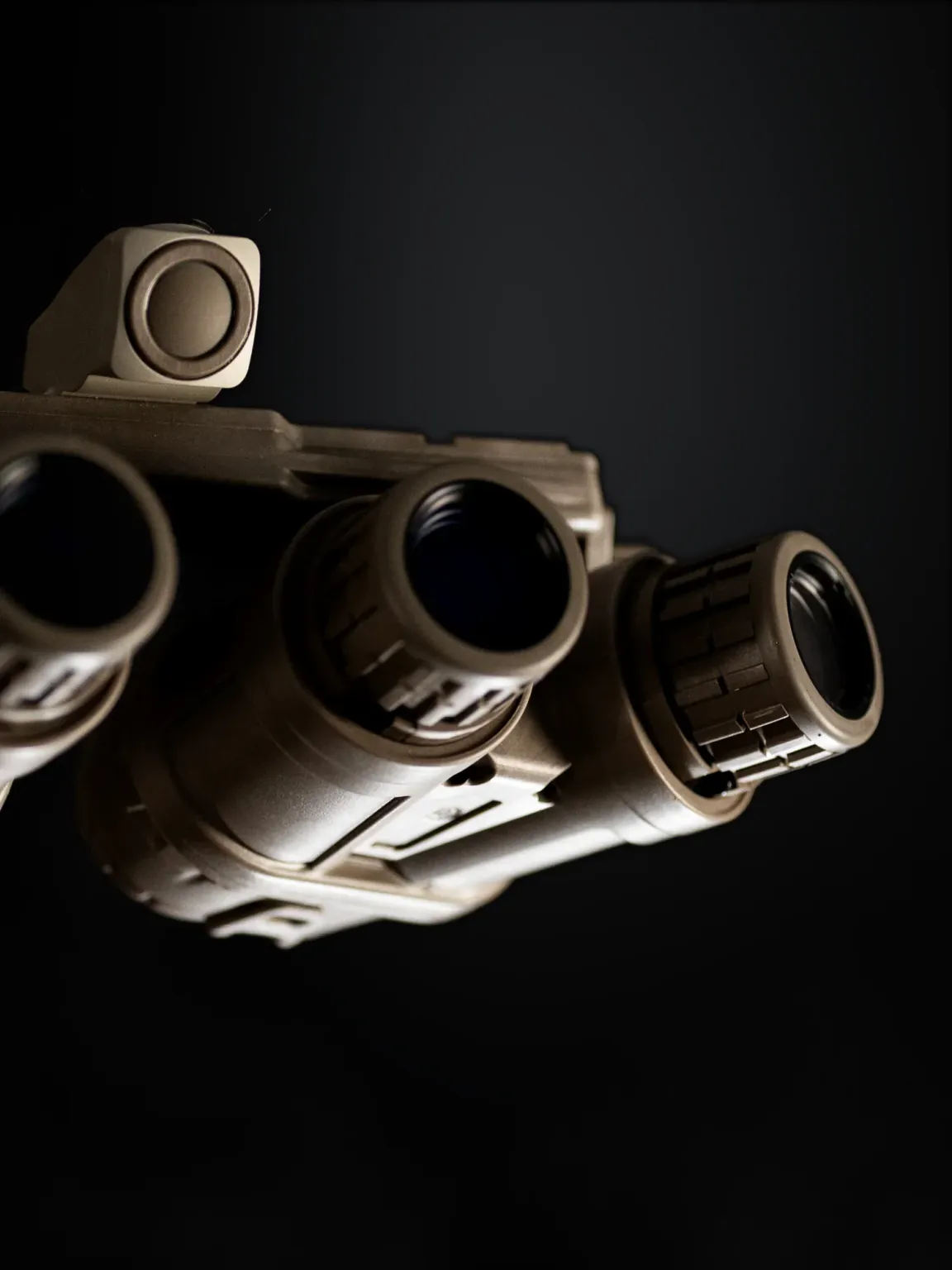
Four tubes
What is panoramic night vision?
Panoramic night vision puts four image intensifier tubes in front of your eyes instead of two, which opens the view to roughly 100 degrees where a regular binocular stops at about 40.
On the Argus APNVG, which Argus calls the PNVG18, the two centre tubes give you depth perception and the two outer tubes fill in the sides, so you stop turning your head to see what is next to you. Every tube is measured on its own before it is fitted, and the goggle ships with the test sheet of all four, so you can read exactly what you bought.
All that width costs you something, because the APNVG weighs about 1100 grams with its battery pack against 500 to 580 grams for the binocular, and it starts at €16.450 where the binocular starts at €6.620.
The numbers on the box
What do white phosphor, figure of merit and autogate mean?
They are the three things on a spec sheet that decide what you actually see: white phosphor is the colour of the picture, the figure of merit is how much detail a tube holds in very little light, and autogate is what keeps the picture usable when a light comes on.
White phosphor
White phosphor shows the night in black and white rather than green, which is easier on the eyes over a long night. Both of our devices use P45 white phosphor.
Figure of merit
The figure of merit, or FOM, is the resolution of a tube multiplied by its signal to noise ratio. Resolution is the detail you can pick out and signal to noise is how clean that detail stays when there is almost no light left, so a tube that resolves 68 line pairs per millimetre at a signal to noise ratio of 25 comes out at a figure of merit of about 1700. That is why we sell every device by its figure of merit, and why the test sheet of every tube goes in the box.
Autogate and manual gain
Autogate adjusts the tubes instantly to bright light such as a flashlight or muzzle flash, so the picture stays usable the moment someone puts a light on. Manual gain control, on both devices, lets you turn the picture down yourself when the light changes.
NNVT5
This is the tube series inside both our devices, with a figure of merit of 1600+.
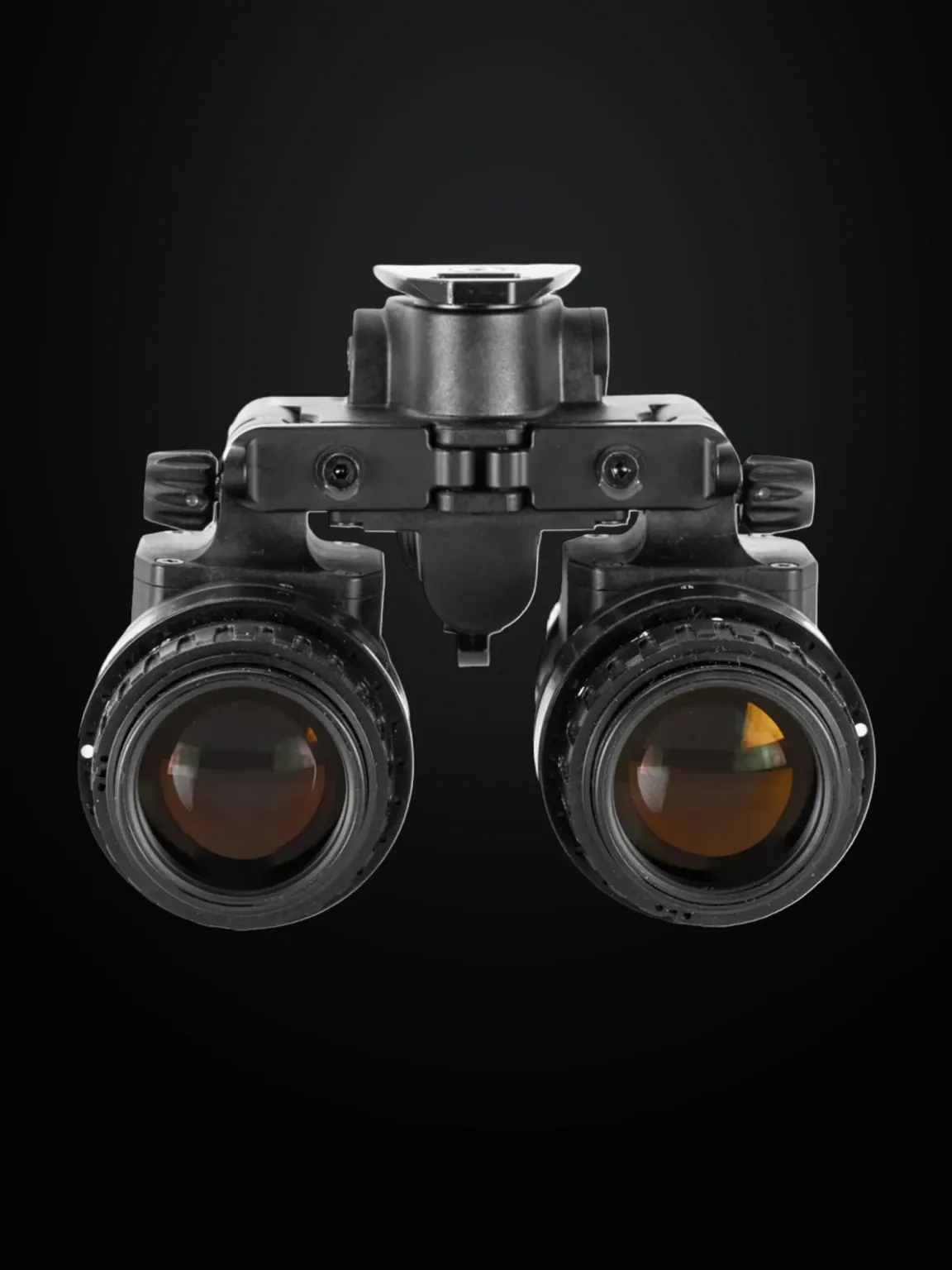
Before you buy
Who is night vision for?
Night vision is for anyone who has to move, watch or work in the dark without giving their position away with a light, which in practice means airsoft players on night games, hunters in places where hunting with it is allowed, people in security work and collectors who want the real thing on the shelf.
What you are allowed to own and use differs from country to country, and we cannot tell you what applies where you live, so check that before you order, because that part is your call and not ours.
Shipping is free and goes worldwide, and outside the EU every goggle is cleared for export first, so we confirm your order once we have checked it. Count on roughly a month between your order and the device on your doorstep, because every device is prepared, registered and cleared for export before it ships.
Care
How do you look after a night vision device?
You look after a night vision device by keeping daylight off the tubes, keeping the housing closed and storing it in its case.
The APNVG comes with four day filter caps that protect the tubes when you check the goggle in daylight, and with a black hard case with foam cut-outs for when you are not using it. Both devices are sealed, the binocular to IP68 and the goggle to two metres for thirty minutes, and the goggle is vacuum tested and nitrogen purged when it is assembled, so there is no reason to open either of them. If something is wrong, contact us before you reach for a screwdriver.
Flip the goggle up when you are not looking through it, because flipping it up switches it off, and carry spare batteries, since one AA keeps the binocular going for more than 15 hours and a set of four keeps the goggle going for about 100.
Questions
What else do people ask before they buy night vision?
Is the APNVG Gen 3?
No. Our APNVG uses NNVT5 tubes with a figure of merit of 1600+, and we do not call them Gen 3. We sell it by the figure of merit and put the test sheet of every tube in the box, so you compare measured numbers rather than a label.
What is the PNVG18?
PNVG18, also written PNVG-18, is the name Argus uses for its panoramic night vision goggle, the one most people know as the APNVG. It is the same device.
Can you use the BNVD-1431 MK2 with one eye?
Yes. Each pod folds away by 140 degrees and comes off completely, so you can use it with one eye or both.
Does the price include VAT?
Yes. The price of both devices includes VAT, and shipping is free, wherever in the world you are.
How long does delivery take?
Count on roughly a month between your order and delivery. Every device is prepared and registered before it ships and the export paperwork is arranged for the country it is going to, and outside the EU we confirm your order once it is cleared for export.
Do discount codes work on night vision?
No. Night vision is excluded from every discount code, also during a sale.
Which one fits the way you work at night?
Whether you pick two tubes or four, shipping is free, the price includes VAT and the test sheet of every tube comes with it.
Sichere Zahlung
Alle diese Zahlungsarten kannst du an der Kasse nutzen. 60.000+ Kunden in 75+ Ländern.