Blog
Selection & Service
Dutch Marines Selection: What It Actually Takes
There is no decent English page about getting into the Korps Mariniers. I went looking. What you find is a Wikipedia stub, a GlobalSecurity page nobody has touched in fifteen years, and a Quora thread where three people who never served explain it to each other.
For a corps that has been running since 1665 and is one of the harder tickets in Europe, that is strange. So I wrote it myself.
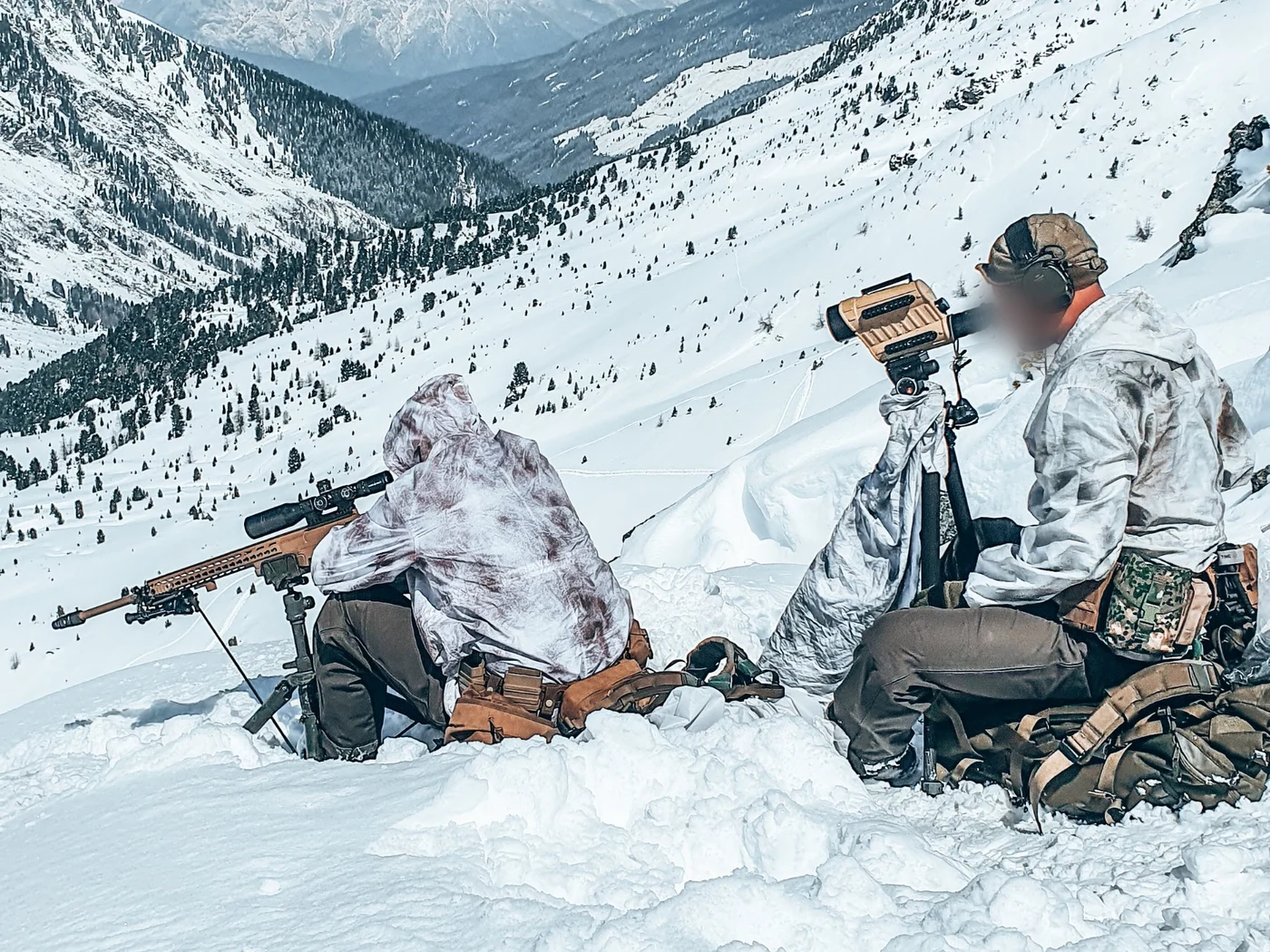
I was not a marine. I served as a sniper with the 11th Air Mobile Brigade, red beret. Everything I say about the Corps here I saw from the outside, and I would rather tell you that up front than let you work it out halfway down the page.
01
What I actually think of the Marines
I always looked up to the Marines, though not in the way you would expect. It was never about them being better or stronger than us. We knew they were at our level because they know how to operate their systems and tactics very well, but nonetheless we made jokes about them whenever we got the chance. That is how it works between units. You take the piss out of the people you quietly respect, and nobody ever admits to the respect part.
There is one thing that gives the game away. Plenty of guys move from the Marines to Airmobile, while you hear a lot less about anyone going the other way. Everyone has a theory about why that is, and everyone shapes their theory to make themselves look good, so I will leave it there.
If you want it settled without anyone’s opinion getting in the way, Defence settled it a long time ago. Every role sits in a cluster based on how heavy the physical demand is, and Cluster 6 is the top of that scale.
There is no Cluster 7.
People love arguing about which Dutch unit is the hardest, and Defence quietly answered that years ago by putting all three of us in the same box.
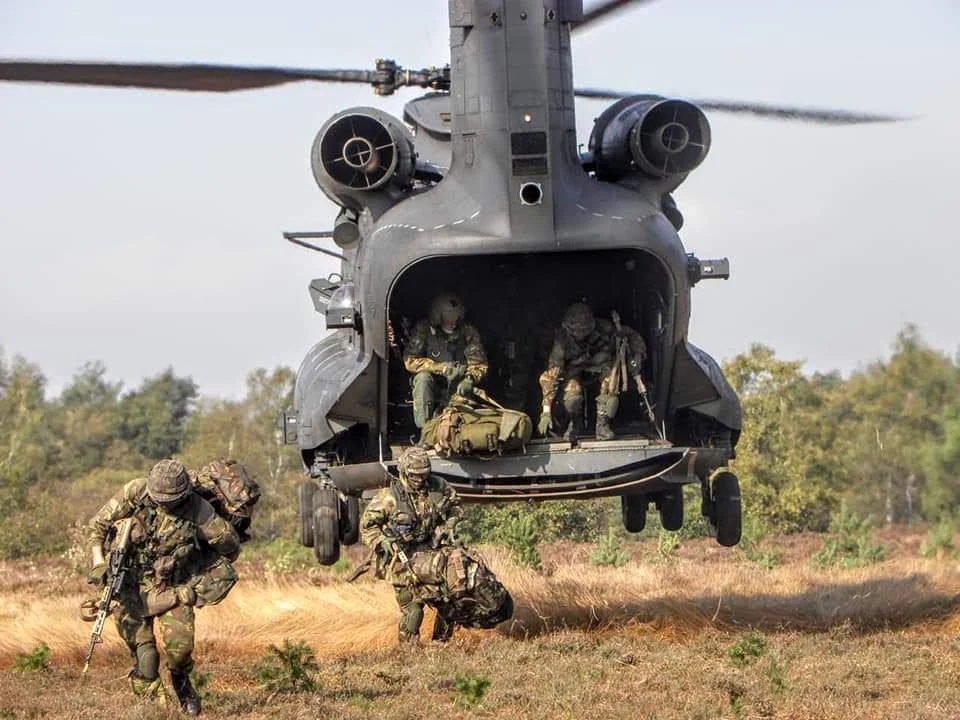
The guys I knew who went to the Corps were basically like us, just in a different uniform doing a slightly different job that still looked a lot like ours. What stands out about marines is how hardened they are. They are not afraid of taking a hit, and they are more comfortable taking an order than we were, because Airmobile guys want the control in their own hands and tend to think for themselves a bit more. That is what I saw, and it is what I heard over and over from people who worked with both.
It is a hell of a unit. I never saw them properly up close, but from what I did see, those are guys operating at Airmobile level or above it.
Let me be straight about when this is from. I worked alongside marines roughly between 2020 and 2023, and that is where all of this comes from. I am not going to pretend I was there last week. Standards move, they always have, and I know that because I still have mates and old colleagues sitting in the training cadres who see it from the inside on both sides of this. So take what follows as the general picture, and go by the current standards Defence publishes when it is your turn on the day.
02
The entry requirements
Before any of the physical work starts, you have to get through the gate.
- Age
- At least 17 years and 6 months, at most 26 years and 11 months
- Education
- VMBO diploma minimum
- Height
- At least 165 cm
- Eyesight
- Nothing below -6 or above +6
- Swimming
- Swimming certificate required
- Nationality
- Dutch
Half the English pages out there still claim otherwise, which means they have been wrong for nine years running and nobody has bothered to fix it.
03
Cluster 6: the physical standard
Check these against Defence’s own page before you build a training plan around them, because they are not carved in stone and they have shifted before.
Now look at that pull-up number. Four, for the Marines. That figure throws everybody, and it is the most misread number in the entire process, because four pull-ups is not the standard of a marine.
It is the standard to be allowed through the door.
04
The numbers are the bare minimum
What I am about to say goes for every part of Defence, not just the Corps: the numbers they ask you to hit are the absolute floor of what you need to be able to do.
Running eight laps of the woods with a jerrycan in each hand does not show up anywhere in that table. You can do your 30 sit-ups and your 30 push-ups without ever meeting a jerrycan, and the same goes for the beams, the crawling and the lack of sleep.
If you are fit and you do not quit, you make it. That is the whole formula.
I will admit that “fit” is not what it used to be, but if you train properly, and I do not mean only the gym, I mean you actually run, then your body is not the thing that removes you.
Because here is what actually happens to people. Most of the ones who fail are not thrown out, they stop themselves, or they get it into their head that the cadre does not rate them and they throw in the towel before anyone asks them to.
Roughly 80% quitting on their own, 10% injuries, 10% told to go. Or somewhere around 70/20/10. That is what I have been told rather than a statistic I can hand you, but even at the low end, look at that number.
05
So how do you actually prepare
Go for long walks, do speed marches, and get out there with a pack on your back.
And then the most important thing of all: build it up slowly. Do not look at someone carrying 40 kilos and assume you can do the same thing tomorrow. I have watched people close to me go too hard too early, injure themselves, and set their entire Defence career back by years over something that was completely avoidable. The build-up is everything. It is the least exciting advice I have, and it is the most useful.
Who to talk to
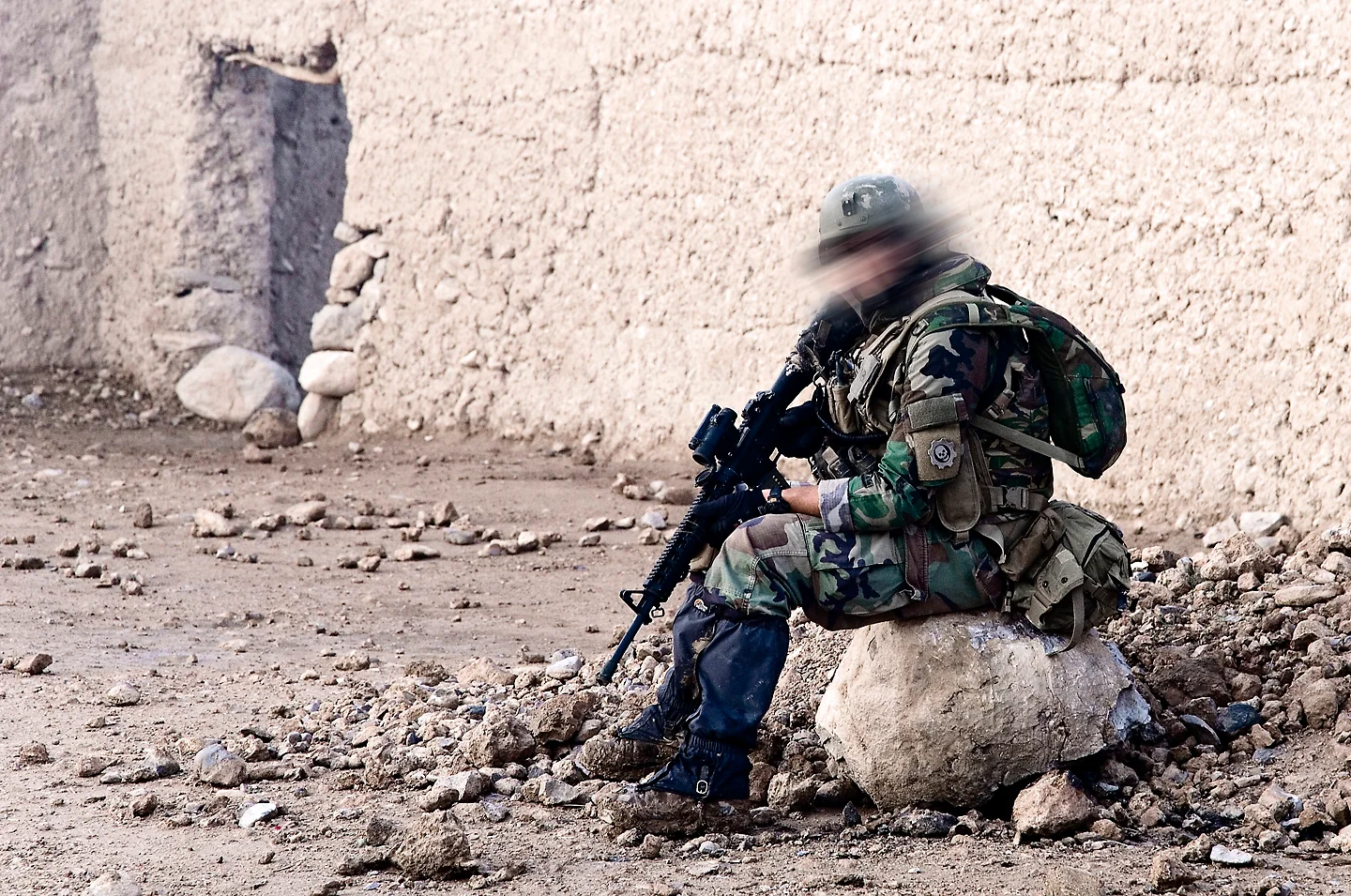
If you want that from someone who actually wore the beret instead of someone who watched from the unit next door, talk to Noël Brand. He is a good friend of mine, he did fourteen years in the Korps Mariniers as a korporaal including Uruzgan, and he finished up as Instructeur Fysieke Training at the Remedial Training Group, which is where Defence sends the people who have broken themselves. So when I tell you that building it up slowly is the whole game, understand that he is the man who spent years putting back together the ones who did not.
He runs Defensie Trainingsschema, which he started while he was still deployed in Uruzgan and has been running since 2014. He builds people for the Marines, the Commandotroepen, DSI, BSB, the Airmobile Brigade and the Belgian para-commandos, so he is not guessing at what any of them are going to ask of you. Injury prevention and load capacity are his entire specialism.
I get nothing for saying this. He is my mate, he is the real deal, and if you are serious about this you should be talking to him rather than to me.
06
The selection process
The Cluster 6 standard above.
Eyes, ears, joints, all of it.
Aptitude and mental suitability.
That last one quietly does the most work, and it is the one nobody prepares for. You can train a Cooper test in eight weeks. You cannot cram a personality.
07
The training
The training runs in two blocks, both at the Mariniers Opleidingscentrum at the Van Ghentkazerne in Rotterdam.
Elementaire Militaire Vorming Mariniers. The foundation.
Eerste Vak Opleiding Marinier Algemeen. Working together tactically, as a unit.
That is roughly thirty weeks before you are a marine, which is comparable to the British Royal Marines, and that is no accident given the two corps have worked side by side for decades.
08
Thirty weeks is not a number, it is every single week
Every week you have to show up, and every week your limits move a little further out. You get tested, you do things you do not want to do at the exact moment you least want to do them, and almost every week has something grim in it with times you have to hit.
You cannot put a requirement on paper that tells you whether someone can handle that. It comes down to character and to what is inside you, and not everyone is built for it, which is not an insult.
The people I watched fail were carrying a lot of doubt about whether they were good enough, and I heard the same sentence from them over and over: this is not what I expected. People want the end result they have been dreaming about, but they do not want to do the work that produces it.
What nobody warns you about is that it is actually a beautiful thing. You come out of it a different person, and you make friends for life.
I did. The guys I went through training with, the guys in my section, I still see them.
One more thing, and I did not do it on purpose. I simply let it come at me. As you go through, you hear what is coming next because everyone talks, and you can prepare for it, and people do, they lie awake for it. But it always goes differently for you than it did for the guy who told you about it, so you may as well let it come. That worked for me better than any preparation would have.
09
After the corps: NLMARSOF
For anyone who wants to go further there is the Netherlands Maritime Special Operations Forces, which opens with a three-week pre-selection called the Aptitude. Get through that and the twenty-week MSOF course turns you into an operator.
That is the point. It is short because it does not need to be long.
10
Your why is the whole thing
You are going to think, more than once, what the f am I doing here, why did I start this, do I even want this. That thought is coming for you, guaranteed, and the only thing that carries you past it is knowing what you are doing it for. If your why is that you wanted to do something cool, you are going to hit a wall and you are going to hit it hard, because training is mostly the shit you do not want to do.
So here is what I would say to an eighteen year old.
Forget everything you think you know, and go and do this if you want to become who you always wanted to be.
There is nothing wrong with being a soldier and there is nothing wrong with starting at the bottom of the ladder. You can look down on it all you want, but you need to know what the bottom looks like, so that when you are standing at the top you understand exactly what it took to get there.
I know that one from experience. That story is here: how I got turned down almost everywhere before I ended up at Airmobile, and what it took to earn the red beret.
Everything factual on this page is public and taken from Defence’s own published standards. Everything else is one man’s view from the outside, and it says so.
The Marines design is on the shelf because of what it stands for, not because it looks good on a hoodie.
Browse more military hoodies in The Trace collection.